South Africa
14 Uitenhage Road, North End, Port Elizabeth, South Africa, 6001
+27 41 811 9729 Email Us
14 Uitenhage Road, North End, Port Elizabeth, South Africa, 6001
+27 41 811 9729 Email Us


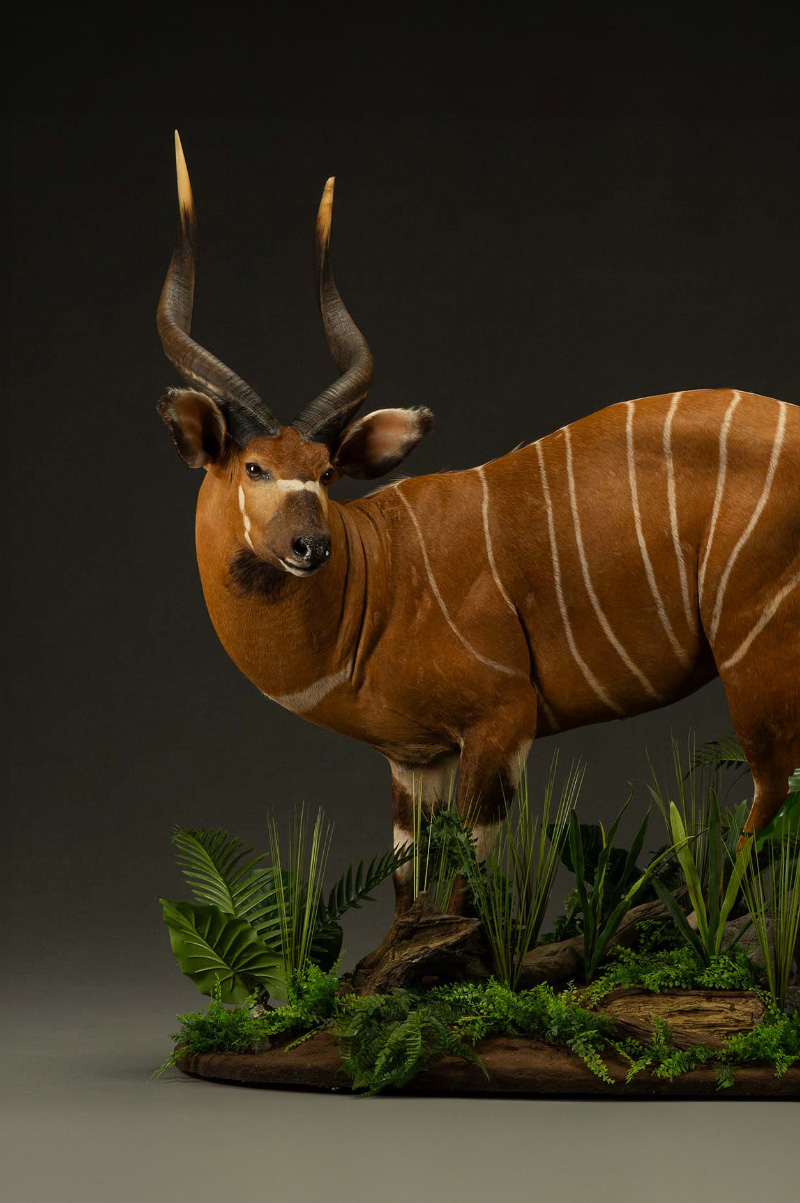
The heavy, strong build, striking white stripes, orange coat, and majestic spiralled horns of the Bongo make it one of Africa's most visually stunning and elusive forest antelopes. Recognized for their vibrant skin and unique appearance, Bongos make a remarkable and eye-catching trophy.
A full mount of the Bongo captures its powerful form, distinctive stripes, and natural stance. Ideal for floor displays, a full-body mount allows for a full appreciation of the Bongo's impressive size and striking features. As the stripes of the Bongo start behind the shoulder, most other mounting options lose the opportunity to showcase these markings.
Bongos belong to the antelope family, and are known for their reddish-brown coat and distinctive white stripes. They are native to Central and West Africa, and are the largest forest-dwelling antelope.
Like other antelope species, bongos are browsers, meaning they live on plant matter. As nocturnal creatures, they forage for food at night in the dense forests they inhabit. Their long, prehensile tongue helps them grab and pull down leaves from high branches. An interesting fact about bongos is that they require a significant amount of salt in their diet, so they are often seen visiting natural salt licks or consuming burned wood.
Typical sounds that bongos make include grunts, snorts, bleats, and bellows. They grunt to alert others in the herd or when mothers are reassuring their calves. Snorts are used as a warning sound, alerting the rest of the herd to prepare to flee. Calves typically bleat to call out to their mothers. Finally, bongos will bellow to maintain contact when deep in the forest, or a male might do so during courtship.
Bongos live in thick, dense forests with plenty of undergrowth that allows them to take cover and hide from predators. They are often found near streams, wetlands, or areas with lush vegetation for feeding.