South Africa
14 Uitenhage Road, North End, Port Elizabeth, South Africa, 6001
+27 41 811 9729 Email Us
14 Uitenhage Road, North End, Port Elizabeth, South Africa, 6001
+27 41 811 9729 Email Us


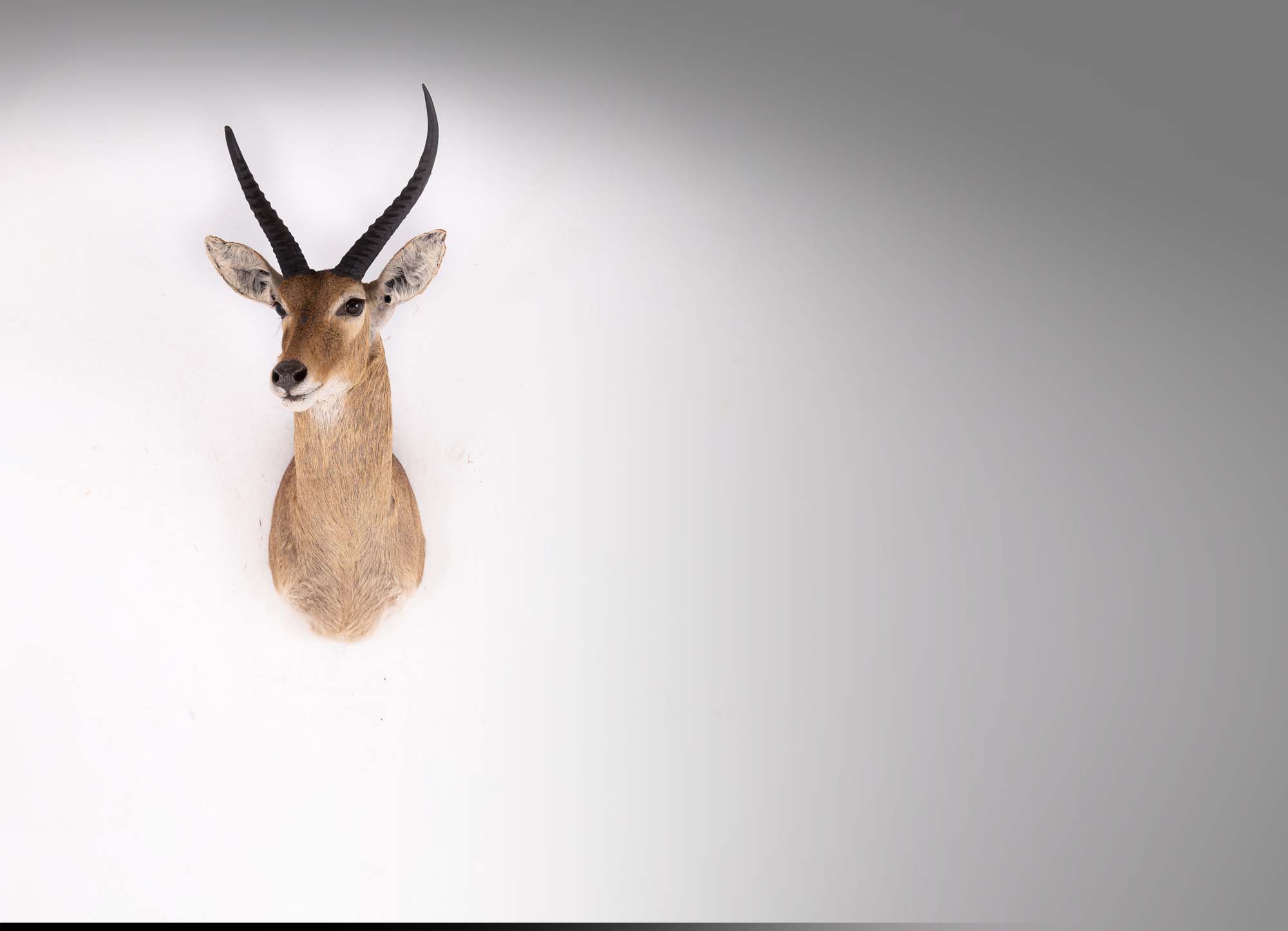
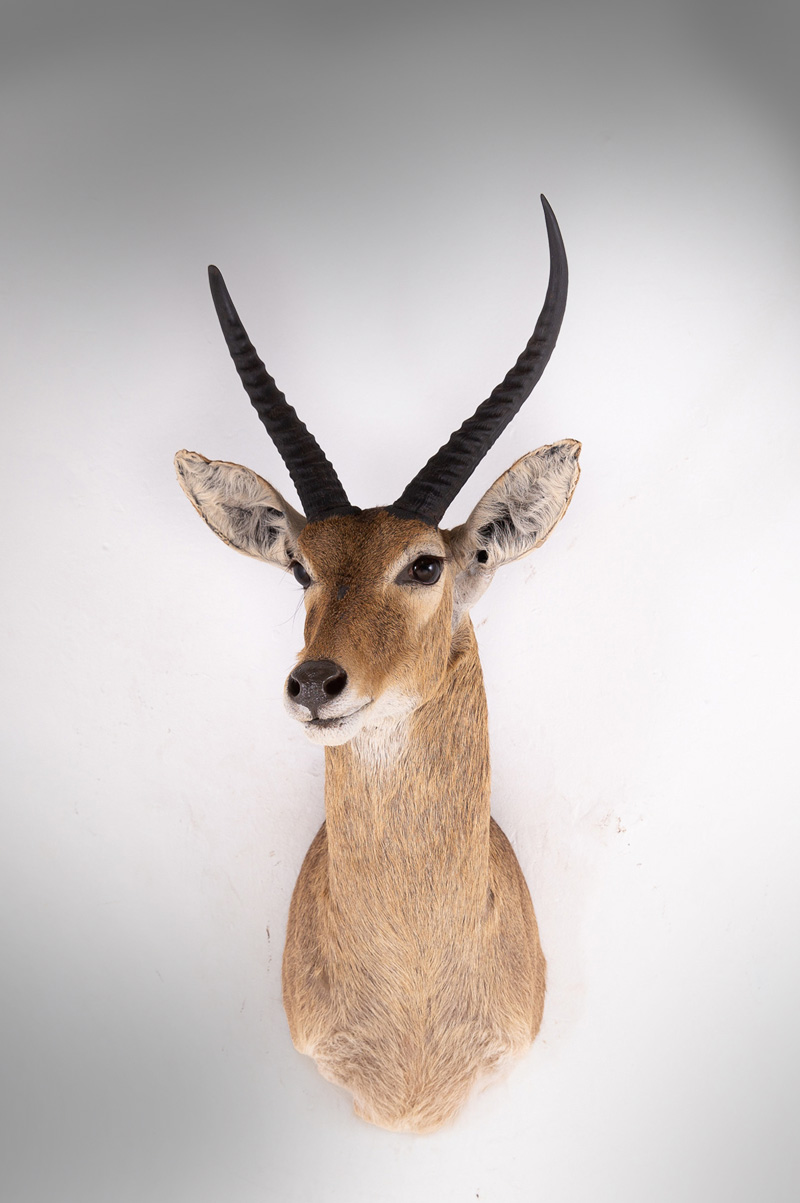
The Common Reedbuck, with its elegant build and lyre-shaped horns, is known for their agility and distinctive features. They have grown in numbers across South Eastern Africa, showing their ability to adapt and thrive.
A shoulder mount of the Common Reedbuck highlights its graceful neck, distinctive lyre-shaped horns, and gentle features. Perfect for wall displays, this option captures the elegance and charm of the Common Reedbuck, making it a stunning addition to any room.
Mountain reedbuck are more slender and adapted to rugged terrains compared to the common reedbuck, which is larger, heavier and more robust.
Only the Male common reedbuck has horns and are thick and more curved, while female have no horns. Additionally, males are slightly larger and more muscular than females.
Common reedbucks are grazing antelopes; therefore, they mainly feed on short grass found in wetlands and open grasslands. While they prefer young, tender shoots, they will still eat other vegetation if the grasses are scarce.
The common reedbuck is found where short grasses are abundant. This includes wet grasslands, floodplains and open savannas.
Common reedbuck face several threats in the wild. The first being predation; typical animals that prey on reedbuck include lions, leopards, hyenas, wild dogs, and crocodiles. Habitat loss is another threat, as many grasslands are increasingly being converted for agriculture, settlements, or infrastructure. Competition from overgrazing also poses a risk, as it can drastically reduce their food sources.