South Africa
14 Uitenhage Road, North End, Port Elizabeth, South Africa, 6001
+27 41 811 9729 Email Us
14 Uitenhage Road, North End, Port Elizabeth, South Africa, 6001
+27 41 811 9729 Email Us


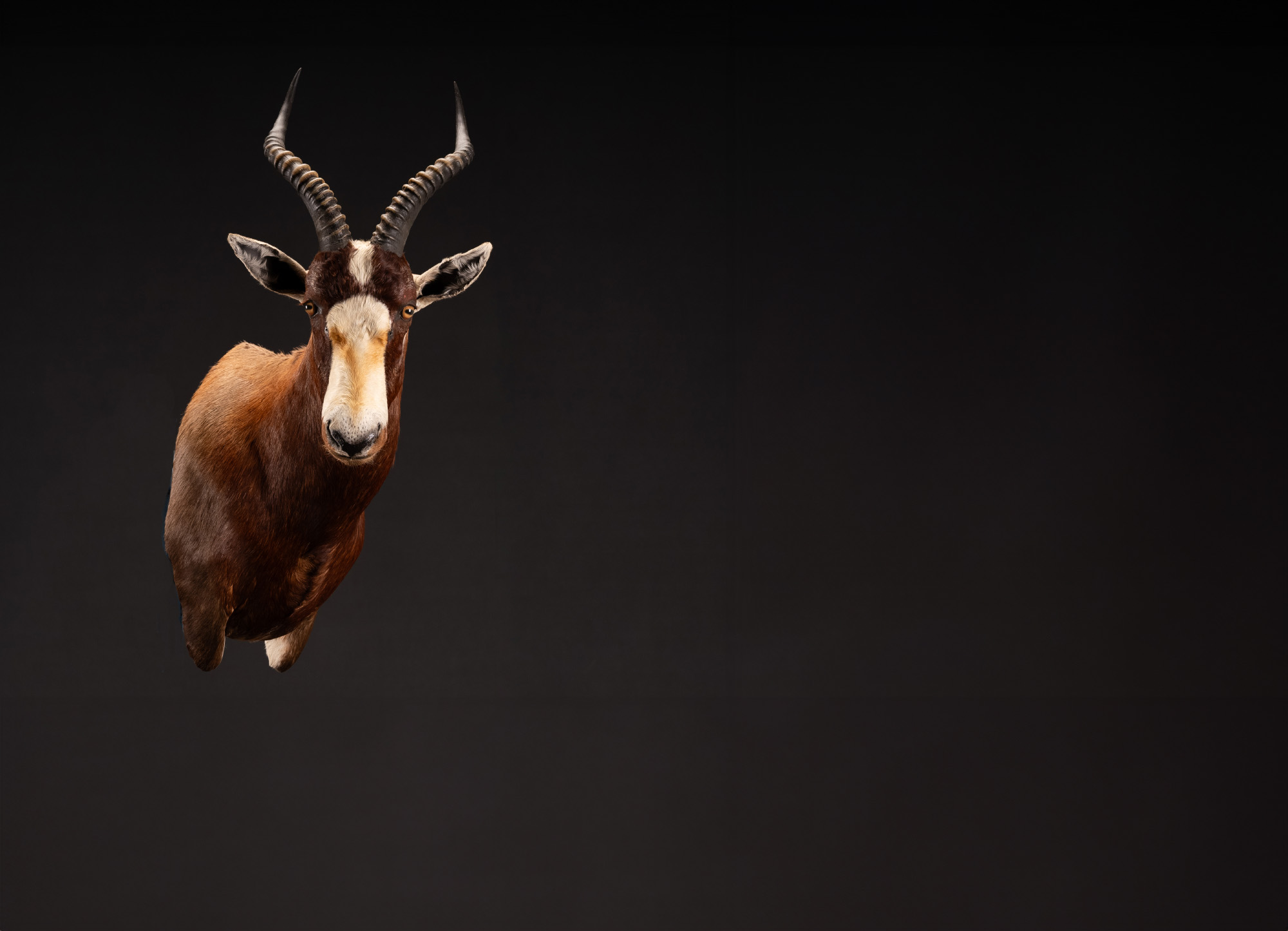
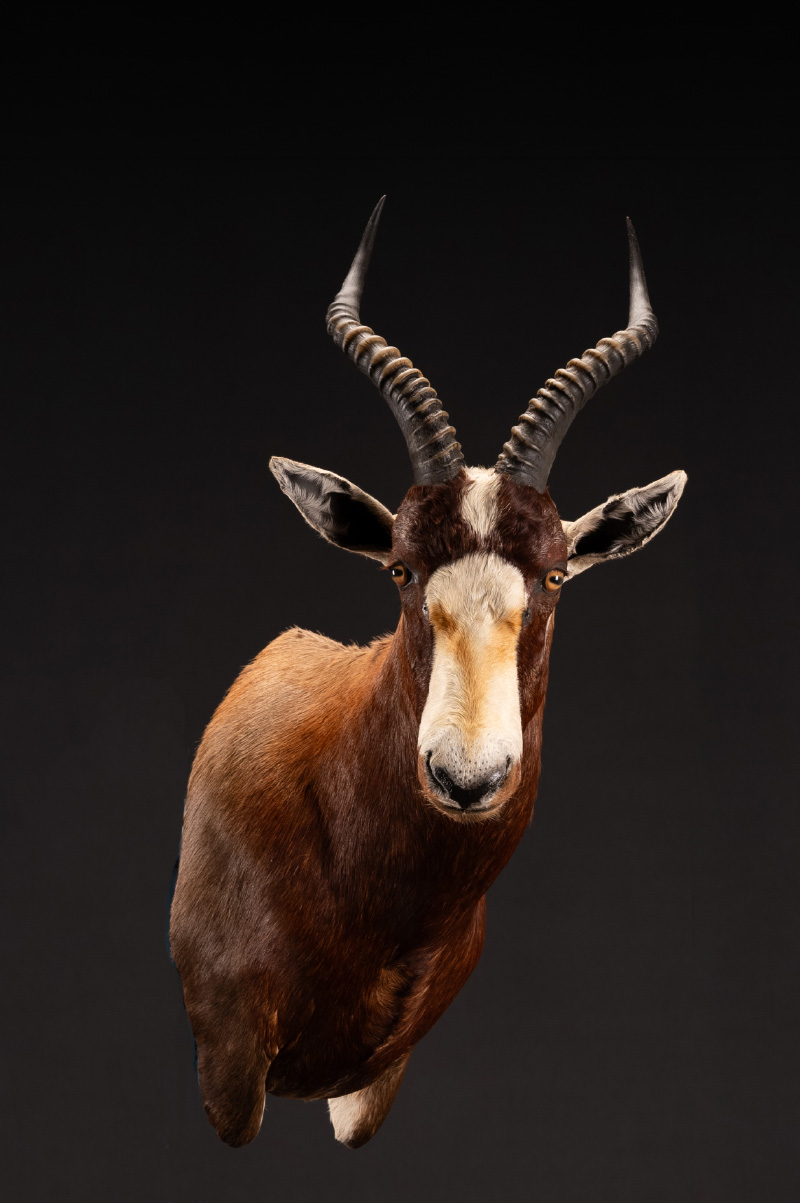
The Blesbuck, with its distinctive white blaze on the face and strong, curved horns, is a striking antelope native to the grasslands of South Africa. It is valued for its unique appearance and endurance. They have a unique head movement, nodding as they walk, it is due to the irritation caused by botfly larvae which inhibit their nasal passage.
The Blesbuck, with its distinctive white blaze on the face and strong, curved horns, is a striking antelope native to the grasslands of South Africa. It is valued for its unique appearance and endurance. They have a unique head movement, nodding as they walk, it is due to the irritation caused by botfly larvae which inhibit their nasal passage.A shoulder mount is a perfect option for your Blesbuck. It shows off all the characteristics of this species, specifically the unusual glands between the bridge of the nose and the eyes.
Blesbok are native to South Africa, and often reside in open grasslands in large numbers. They are also found in protected reserves and private game farms across South Africa.
The most common cause for blesbok head shaking is due to botfly larvae that often infect their nasal passages. Blesbok will shake their heads in order to dislodge them. Other reasons for head shaking include territorial displays or a sign of alertness.
Both springbok and blesbok are antelopes native to southern Africa, yet their appearance, behaviour and habitat differ significantly. In terms of size, springbok are smaller and more agile compared to blesbok, which are more muscular. Blesbok have a distinctive white blaze on their face, and a reddish-brown coat, whereas springbok have a lighter brown coat, with dark brown stripes along their body and face.
Yes, blesbok are known to be territorial. Males will defend specific territories during mating season to attract females and ward off rival males. These territorial acts include scent marking through urine and dung, as well as challenging rivals. Females and young blesbok can and do move between territories.
Yes, bontebok and blesbok can breed, as they are closely related in species. In fact, they have been known to breed, producing hybrid offspring. However, many conservation reserves will monitor this to maintain genetic purity.