South Africa
14 Uitenhage Road, North End, Port Elizabeth, South Africa, 6001
+27 41 811 9729 Email Us
14 Uitenhage Road, North End, Port Elizabeth, South Africa, 6001
+27 41 811 9729 Email Us


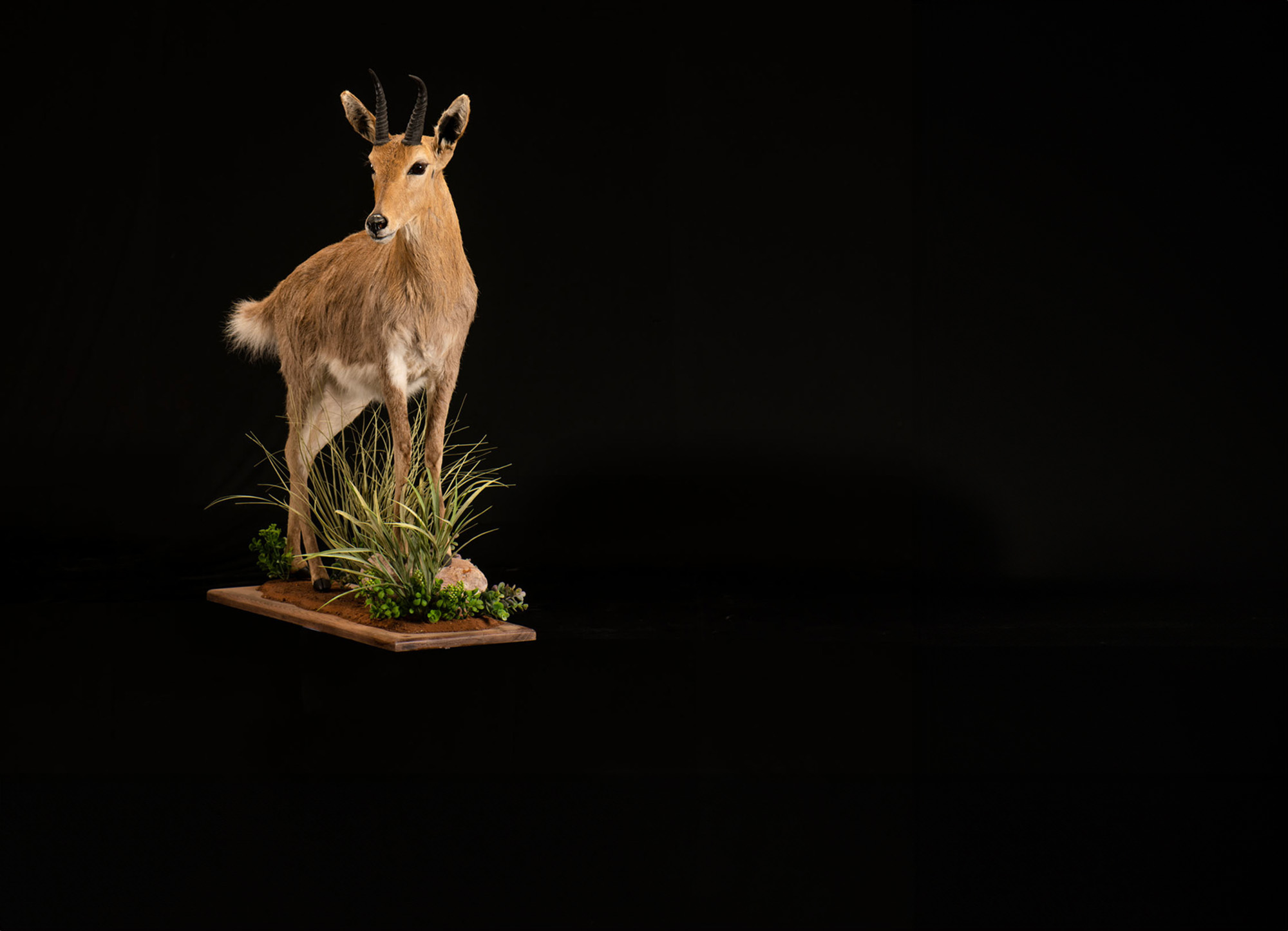
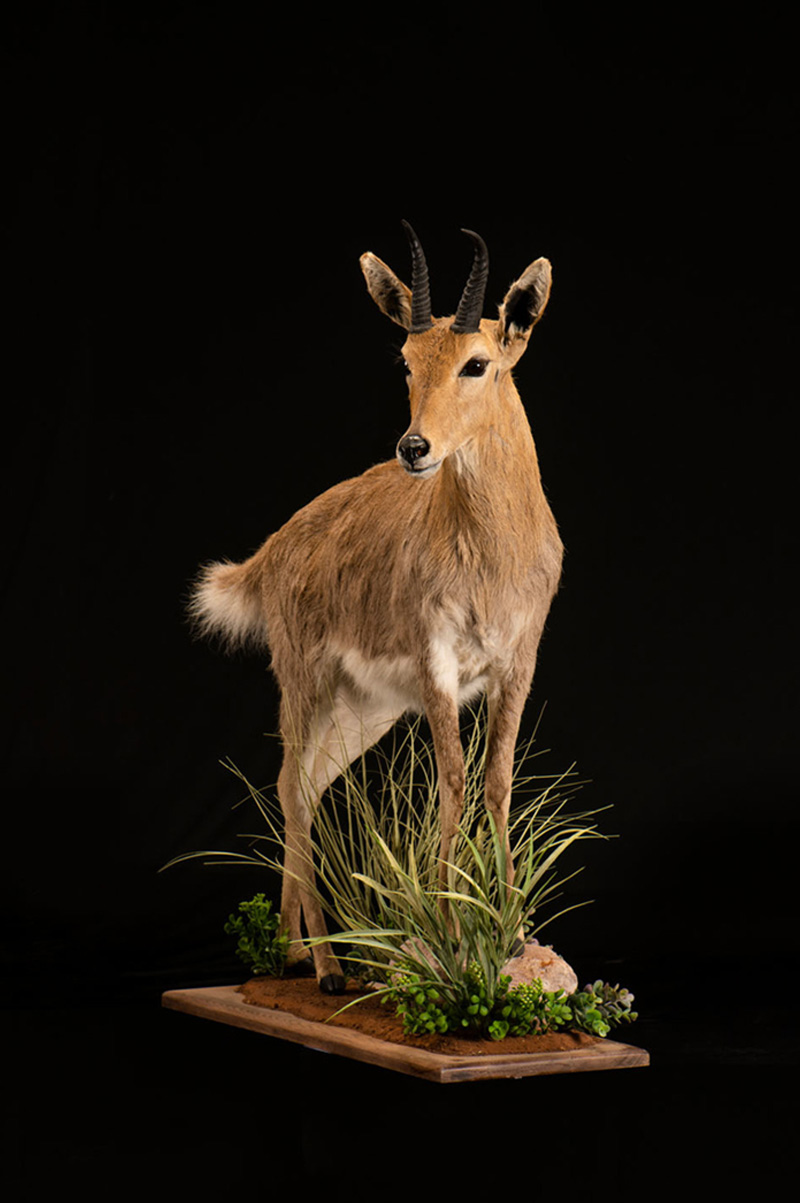
The Mountain Reedbuck, with its sleek build and gently curved horns, is one of Africa's most agile and graceful antelopes. They live in the highland regions are appreciated for their distinctive features and graceful presence.
A full-body mount of the Mountain Reedbuck captures its elegant form, agile stance and that beautiful white, fluffy tail. Perfect for creating either a wall or a floor display, this option showcases the Mountain Reedbuck in a natural pose, highlighting its unique features and the grace it displays in its highland habitat.
Yes, the elusive nature and unique habitat of mountain reedbuck make them challenging to hunt. Their faw like colour makes them increadibly difficult to spot in their natural habitat.
The main difference between mountain reedbuck and common reedbuck are their size, coat colour, and habitat. As the name suggests, mountain reedbuck reside in rocky, mountainous slopes, and their coat is lighter. The common reedbuck reside in marshy areas, and have a darker coat. The Common Reedbuck can weight up to double that of the Mountain Reedbuck. The horns of a Common Reedbuck are often between 10 to 16 inches and Mountain Reedbuck 5 to 8 Inches in length.
99% of the mountain reedbuck's diet consists of grass, specifically, red and thatch grass, or areas that have been burned. In other cases, they will also feed on herbs or shoots. Mountain reedbuck are highly dependant on water, requiring constant access.
The typical mountain reedbuck trophy features horns ranging between 5-8 inches long, with the average shoulder height of 75 cm, and weight ranging between 30-40 kgs.
As the name suggests, mountain reedbuck inhabit rocky, mountainous slopes. They are primarily found in South Africa, Swaziland, Lesotho, Botswana and Namibia.